
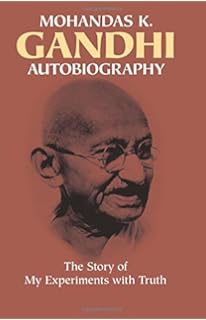
It is notable that the individuals who compose collections of memoirs disclose to us that they construct them in light of their own lives. Be that as it may, is it truly so? Is it accurate to say that they are transparent in revealing to us reality, every bit of relevant information and only reality? Regardless of whether they trust they do - and whether we trust them! - do they truly recollect, in detail, a large number of the wide-go encounters they inform us regarding in their life account? Memory, we as a whole know, is particular, and based, to some extent at any rate, on our observation. All these bring up the issue, what is certainty and what is fiction in an essayist's life account...
It is not just with personal histories that the line amongst actuality and fiction is frequently obscured. It is so additionally in fiction, when the creator cases to not deliberately expecting to incorporate self-portraying components in the novel/story. In any case, is it truly so? What's more, does it have any effect?
The "association" an author feels with another essayist whose life story he composes: Stefan Zweig's history of Honoré de Balzac
Not just fiction and certainties are frequently obscured in a writer's composition; on occasion there is likewise an obscure between an account a writer expounds on another person to the writer's own life. Such, for instance, is Stefan Zweig's (1881 - 1942) history of the French essayist Honoré de Balzac (1799-1850). This life story (distributed by Viking Press in 1946) has, as indicated by some proficiently pundits, components of Zweig's own self-portrayal too.
Be that as it may, just perusers who are well educated about the life of these two essayists can distinguish these components and enjoy seeing the likenesses - and also contrasts - in the lives of these two writers.
Sentiments of "alliance" an essayist feels with another author whose life story she composes: Tatiana de Rosnay's history of Daphne du Maurier
Another instance of intrigue we can discover in Tatiana de Rosnay's history of Daphne du Maurier (1907 - 1989). Tatiana de Rosnay (writer of "Sarah's Key", 2008), states that some of what has driven her to compose a life story of Daphne du Maurier (titled: "Manderley for Ever", 2015) is some connection she felt with the acclaimed British author.
Does such a sentiment "alliance" make the book more "individual" to the essayist and subsequently a "superior" one?
Did it happen or would it say it was a fantasy?
A decent case of the way that self-portraying components and fiction are intermixed with each other can be seen direct in Pablo Neruda's discourse he gave while accepting the Nobel Prise for Literature in 1971. Neruda (1904 - 1973), a Chilean writer and politicos reviewed his escape from Chile to Argentina in 1948, when President González Videla prohibited socialism in Chile and issued a warrant for Neruda's capture (because of his political philosophy). Neruda got away through a mountain-go to Argentina.
In his Nobel Prise discourse Neruda told how he got away on horse-back and in the snow, including that he doesn't know any longer whether this story really happened, regardless of whether he imagined it or curved it amid his composition. In any case, he included, this doesn't generally make a difference!
Self-portraying components in spy - and other - books
Similar maintains John le Carré, the British Author of such surely understood books as "The Spy Who Came in from the Cold" (1963). One of his later books ("A Perfect Spy", 1986) - as the writer himself concedes - is thought to be his most personal novel, an expansive piece of which is a to some degree camouflaged record of le Carré's own particular early life as an insight officer for MI6, the British knowledge benefit.
Some artistic faultfinders take note of that a portion of the book's characters have a striking likeness to le Carré's own particular life: Magnus Pym, for instance, helps to remember encounters Carré himself has encountered at a very early stage in his life; and Rick Pym, the father of Magnus in the novel, has a striking similarity to Carré possess father (John le Carré simply distributed collection of memoirs: "The Pigeon Tunnel: Stories from My Life", Viking, 2016, gives more cases).
Be that as it may, does it have any effect to the peruser realizing that a book as well as a character depend on some of le Carre's own encounters? Does it give it greater believability? We can expect that the appropriate response is NO; that most perusers don't have the smallest thought that there are some self-portraying components in this - and other - books - and still appreciate understanding them.
John Cleese's personal history: An Example of Conscious Creativity?
John Cleese's personal history (John Cleese: "In this way, Anyway... ", 2014) urges us the idea that Cleese's personal history is being told with furthest mindfulness, realness and genuineness.
Telling about his life in a sequential request, Cleese seems to be a man who knows about himself; who tells things "as they may be", a man who doesn't dither to talk up his psyche notwithstanding when realizing that others won't care for hearing what he needs to state, a man who feels there is no requirement for him to "fictionalize" components in his collection of memoirs with a specific end goal to either laud his life or urge us his grievous encounters.
This being the situation, Cleese's personal history is not quite the same as different books as in it doesn't blend and foggy spots fiction and self-portraying components, but instead tells about his life as seems to be. All things considered, Cleese is fruitful in depicting himself as '"who he truly seems to be", which is a compliment not all essayists of self-portrayals can appreciate.
The cognizant or oblivious self-portraying components in a maker's specialty
It is fascinating to take note of that books, as well as numerous different works of creation - be these movies, artworks, photos and so forth - are additionally based, in any event to some extent, on portions of the maker's personal history, regardless of whether the maker does it deliberately or unwittingly.
This, for instance, is the situation with the Spanish executive Pedro Almodovar (conceived in 1949) who is viewed as the most imperative motion picture chief after Luis Bunuel and known as "the ruler of the Spanish drama" (having created at this point 23 motion pictures).
Almodovar has never composed a personal history, and has never approved anybody to compose his account. While in Cannes in 2016, for the head of his new motion picture Julieta, he said that the individuals who wish to comprehend his life must take a gander at the characters depicted in his various movies, since they are the ones framing the string of his life.
Same remains constant with (some of) Woody Allen's movies, which are based - many claim - all alone (psychotic) identity.
Now and again Allen, deliberately, chooses to make a film in light of a genuine individual. Such is the situation in Annie Hall (1977). In her self-portraying book "Of course" (2011) Diane Keaton tells, among other, that Allen has deliberately composed and coordinated Annie Hall (1977) in light of her.
What is there for us, the perusers?
As perusers, it regularly doesn't have any effect to us whether the novel/story/film is based, to some extent, of a few components of the essayist's own life and encounters. Nor does it have any effect to us whether a life story composed by an author incorporates personal components of the essayist himself/herself.
What are vital to us are questions identified with the nature of the written work; the appealing energy of the book; and, on occasion, its pertinence to our own life.
Would we see an anecdotal book as "better" when we know it depends on (a few) personal components of the writer? Would we at that point view it as more valid?
What's more, would we view an account as pretty much dependable realizing that the essayist has obscured in with some of his/her own particular self-portraying components?
This is dubious.
After each of the a book - whether fiction, account or self-portrayal - remains all alone legitimacy; its nature of style; characters' improvement; its scenes, depictions and exchanges.
It is not just with personal histories that the line amongst actuality and fiction is frequently obscured. It is so additionally in fiction, when the creator cases to not deliberately expecting to incorporate self-portraying components in the novel/story. In any case, is it truly so? What's more, does it have any effect?
The "association" an author feels with another essayist whose life story he composes: Stefan Zweig's history of Honoré de Balzac
Not just fiction and certainties are frequently obscured in a writer's composition; on occasion there is likewise an obscure between an account a writer expounds on another person to the writer's own life. Such, for instance, is Stefan Zweig's (1881 - 1942) history of the French essayist Honoré de Balzac (1799-1850). This life story (distributed by Viking Press in 1946) has, as indicated by some proficiently pundits, components of Zweig's own self-portrayal too.
Be that as it may, just perusers who are well educated about the life of these two essayists can distinguish these components and enjoy seeing the likenesses - and also contrasts - in the lives of these two writers.
Sentiments of "alliance" an essayist feels with another author whose life story she composes: Tatiana de Rosnay's history of Daphne du Maurier
Another instance of intrigue we can discover in Tatiana de Rosnay's history of Daphne du Maurier (1907 - 1989). Tatiana de Rosnay (writer of "Sarah's Key", 2008), states that some of what has driven her to compose a life story of Daphne du Maurier (titled: "Manderley for Ever", 2015) is some connection she felt with the acclaimed British author.
Does such a sentiment "alliance" make the book more "individual" to the essayist and subsequently a "superior" one?
Did it happen or would it say it was a fantasy?
A decent case of the way that self-portraying components and fiction are intermixed with each other can be seen direct in Pablo Neruda's discourse he gave while accepting the Nobel Prise for Literature in 1971. Neruda (1904 - 1973), a Chilean writer and politicos reviewed his escape from Chile to Argentina in 1948, when President González Videla prohibited socialism in Chile and issued a warrant for Neruda's capture (because of his political philosophy). Neruda got away through a mountain-go to Argentina.
In his Nobel Prise discourse Neruda told how he got away on horse-back and in the snow, including that he doesn't know any longer whether this story really happened, regardless of whether he imagined it or curved it amid his composition. In any case, he included, this doesn't generally make a difference!
Self-portraying components in spy - and other - books
Similar maintains John le Carré, the British Author of such surely understood books as "The Spy Who Came in from the Cold" (1963). One of his later books ("A Perfect Spy", 1986) - as the writer himself concedes - is thought to be his most personal novel, an expansive piece of which is a to some degree camouflaged record of le Carré's own particular early life as an insight officer for MI6, the British knowledge benefit.
Some artistic faultfinders take note of that a portion of the book's characters have a striking likeness to le Carré's own particular life: Magnus Pym, for instance, helps to remember encounters Carré himself has encountered at a very early stage in his life; and Rick Pym, the father of Magnus in the novel, has a striking similarity to Carré possess father (John le Carré simply distributed collection of memoirs: "The Pigeon Tunnel: Stories from My Life", Viking, 2016, gives more cases).
Be that as it may, does it have any effect to the peruser realizing that a book as well as a character depend on some of le Carre's own encounters? Does it give it greater believability? We can expect that the appropriate response is NO; that most perusers don't have the smallest thought that there are some self-portraying components in this - and other - books - and still appreciate understanding them.
John Cleese's personal history: An Example of Conscious Creativity?
John Cleese's personal history (John Cleese: "In this way, Anyway... ", 2014) urges us the idea that Cleese's personal history is being told with furthest mindfulness, realness and genuineness.
Telling about his life in a sequential request, Cleese seems to be a man who knows about himself; who tells things "as they may be", a man who doesn't dither to talk up his psyche notwithstanding when realizing that others won't care for hearing what he needs to state, a man who feels there is no requirement for him to "fictionalize" components in his collection of memoirs with a specific end goal to either laud his life or urge us his grievous encounters.
This being the situation, Cleese's personal history is not quite the same as different books as in it doesn't blend and foggy spots fiction and self-portraying components, but instead tells about his life as seems to be. All things considered, Cleese is fruitful in depicting himself as '"who he truly seems to be", which is a compliment not all essayists of self-portrayals can appreciate.
The cognizant or oblivious self-portraying components in a maker's specialty
It is fascinating to take note of that books, as well as numerous different works of creation - be these movies, artworks, photos and so forth - are additionally based, in any event to some extent, on portions of the maker's personal history, regardless of whether the maker does it deliberately or unwittingly.
This, for instance, is the situation with the Spanish executive Pedro Almodovar (conceived in 1949) who is viewed as the most imperative motion picture chief after Luis Bunuel and known as "the ruler of the Spanish drama" (having created at this point 23 motion pictures).
Almodovar has never composed a personal history, and has never approved anybody to compose his account. While in Cannes in 2016, for the head of his new motion picture Julieta, he said that the individuals who wish to comprehend his life must take a gander at the characters depicted in his various movies, since they are the ones framing the string of his life.
Same remains constant with (some of) Woody Allen's movies, which are based - many claim - all alone (psychotic) identity.
Now and again Allen, deliberately, chooses to make a film in light of a genuine individual. Such is the situation in Annie Hall (1977). In her self-portraying book "Of course" (2011) Diane Keaton tells, among other, that Allen has deliberately composed and coordinated Annie Hall (1977) in light of her.
What is there for us, the perusers?
As perusers, it regularly doesn't have any effect to us whether the novel/story/film is based, to some extent, of a few components of the essayist's own life and encounters. Nor does it have any effect to us whether a life story composed by an author incorporates personal components of the essayist himself/herself.
What are vital to us are questions identified with the nature of the written work; the appealing energy of the book; and, on occasion, its pertinence to our own life.
Would we see an anecdotal book as "better" when we know it depends on (a few) personal components of the writer? Would we at that point view it as more valid?
What's more, would we view an account as pretty much dependable realizing that the essayist has obscured in with some of his/her own particular self-portraying components?
This is dubious.
After each of the a book - whether fiction, account or self-portrayal - remains all alone legitimacy; its nature of style; characters' improvement; its scenes, depictions and exchanges.


No comments:
Post a Comment